Every year, I get asked over and over, “How do I start an Etsy store?” If you've been considering starting a small business, I'm going to walk you through starting an Etsy store from step one to help answer any questions you may have.
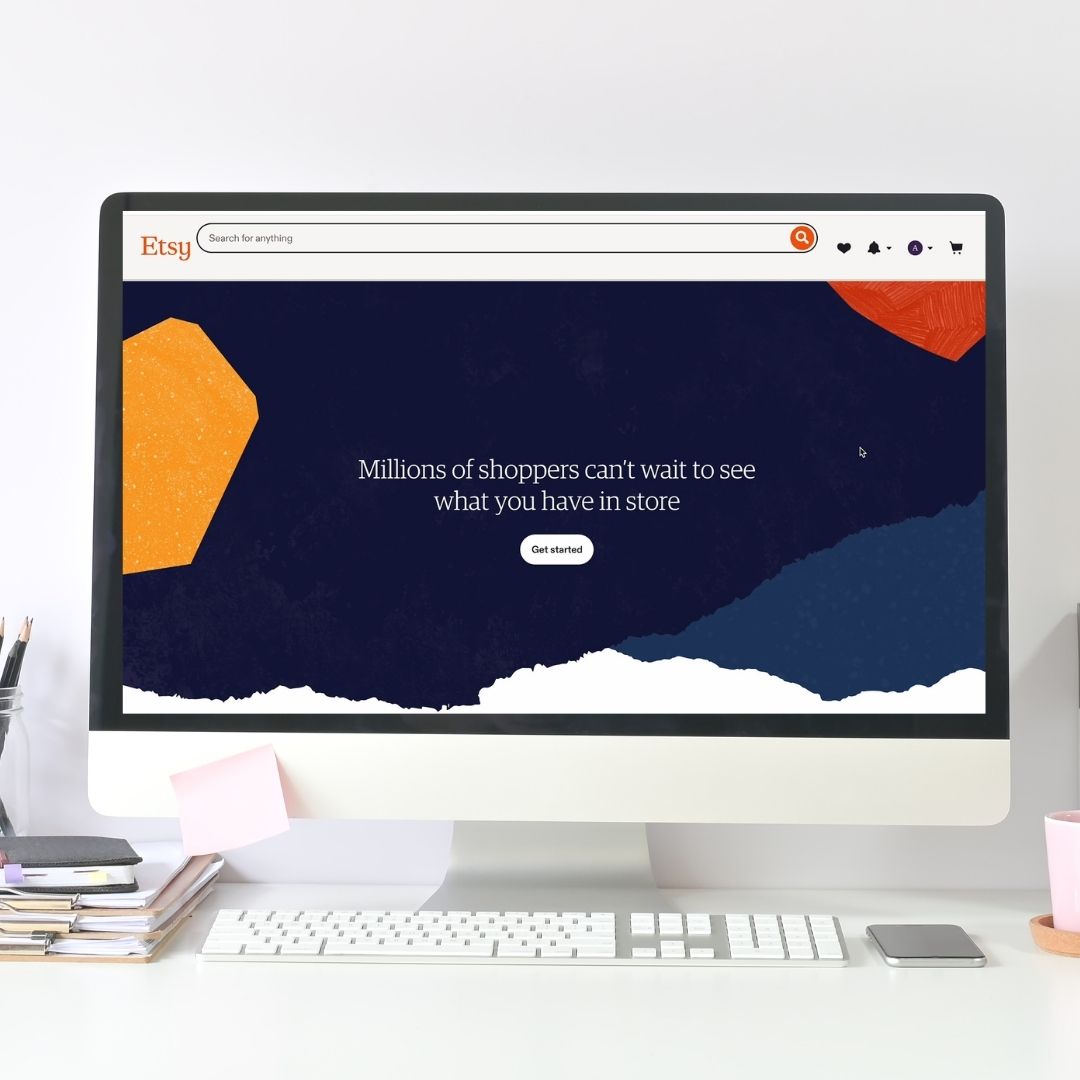
Etsy can be a great tool for small businesses, but without some help, you may post your products, and no one will even see them.
How to Start an Etsy Store for Your Small Business
Before we jump into setting up an Etsy store, there are some questions you need to ask yourself and consider the answers before continuing.
1. Is Etsy Right for You?
The first thing you need to ask yourself is, is Etsy the right platform for your handmade business?
Etsy is a great place to start. Just know that as you grow, you may choose to move to a different platform.
Here are a few pros and cons for owning an Etsy shop:
Pros:
- People come to Etsy looking to buy.
- Etsy spends money to bring people to Etsy where they can find you.
- Etsy is well known.
- Etsy collects and remits sales tax for you.
- Etsy listings often show up high in Google searches.
Cons:
- Etsy fees are higher than other platforms.
- There is a lot of competition on Etsy.
- Right now there is a lot of AI on Etsy.
- You are at the mercy of Etsy showing your shop when people search.
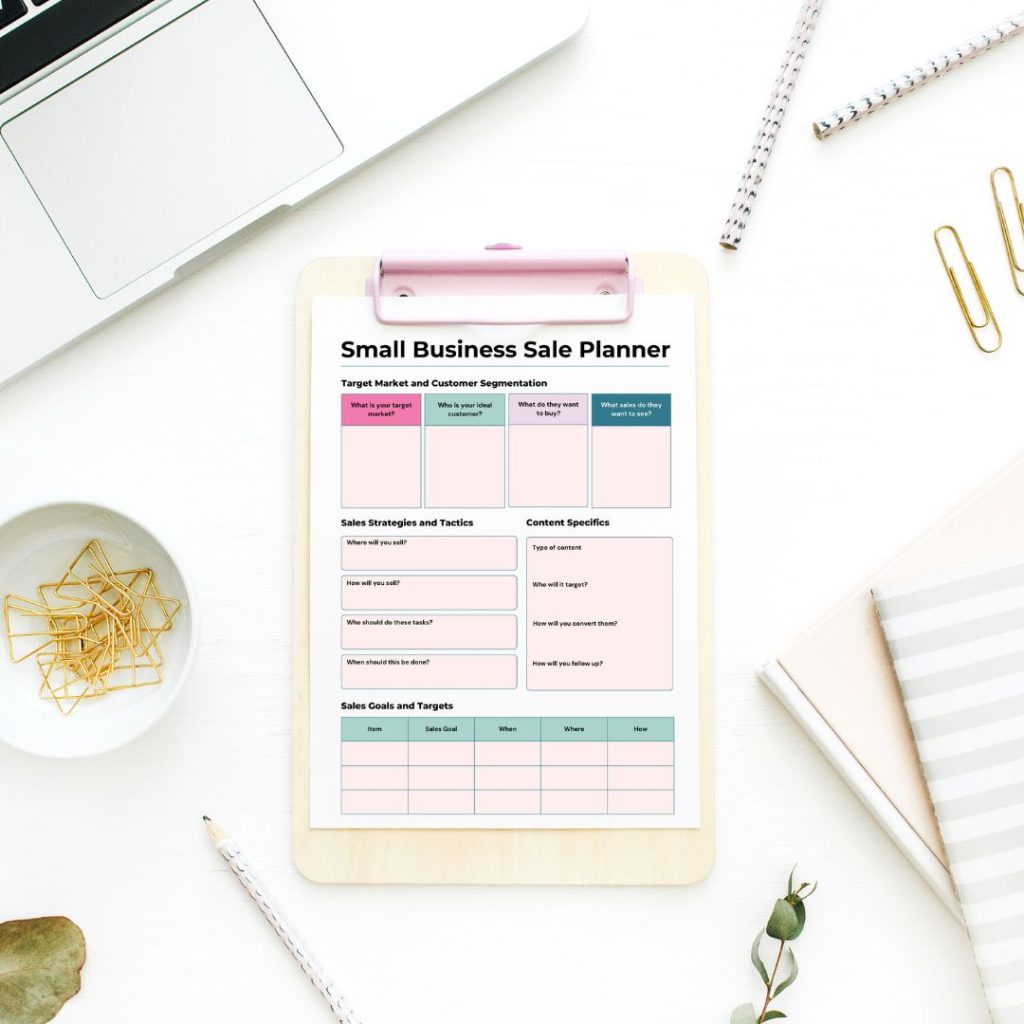
Get my free small business sale planner!
Plan your next sale using this 2 page planner and reach as many people as possible! Increase your reach and increase your sales with a well thought out plan that will have customer coming back again and again!
2. What Are You Going to Sell?
Before you set up an Etsy shop and come up wth a name, you need to know what you're selling and if you can even sell it on Etsy.
If you already have a local business and you're looking to grow, you already know what you're selling. If you want to start a business and know you want to start on Etsy, you need to know what items can be sold on Etsy and if it works for you to sell it there.
What Can Be Sold on Etsy?
On Etsy you can sell:
- Handmade goods
- Digital Products
- Craft Supplies
- Vintage Goods
This is not a comprehensive list, and I'm sure you've seen items on Etsy that you don't feel should be there. To protect yourself, go to Etsy itself and research what their rules are on different items.
You may find it helpful to consider what category your current items may fit in, or where the items you think you want to make fit in, and start researching there.
The categories are pretty broad, and I would never recommend someone start a shop thinking, “I am going to sell digital products”. That is too vague. Consider niching down to a specific area, preferably something you know and enjoy, or something you're willing to learn and enjoy.
If you decide to make products for dogs and you hate dogs, your heart is not going to be in it, and getting photos of your products is going to be difficult.
Another thing to consider is inventory and shipping.
Let's use custom t-shirts as an example. If you want to sell custom t-shirts you need to do one of two things.
- Sell pre-made shirts with a design already on them in a variety of different sizes, or
- Sell custom-made shirts that are made to order.
People do both on Etsy successfully, and there are pros and cons to both.
If you want to sell pre-made shirts, you get the perk of shipping items quickly, making you ideal for last-minute shoppers. You are also limited to the sizes you have on hand and how much inventory you can store. You also run the risk of something that you've already made not selling.
If you choose to make items when you receive the order, you can reduce how much inventory you need to have on hand. You also eliminate creating items that may not sell. A con would be that you can't prepare items ahead of time, meaning your shop wouldn't be for last-minute shoppers.
I also want you to think about shipping costs. How large are your items? Are they breakable? These are things to consider because shipping costs/packaging can price you out of being competitive.
Starting an Etsy Shop
To start an Etsy shop, head to etsy.com and create an account.
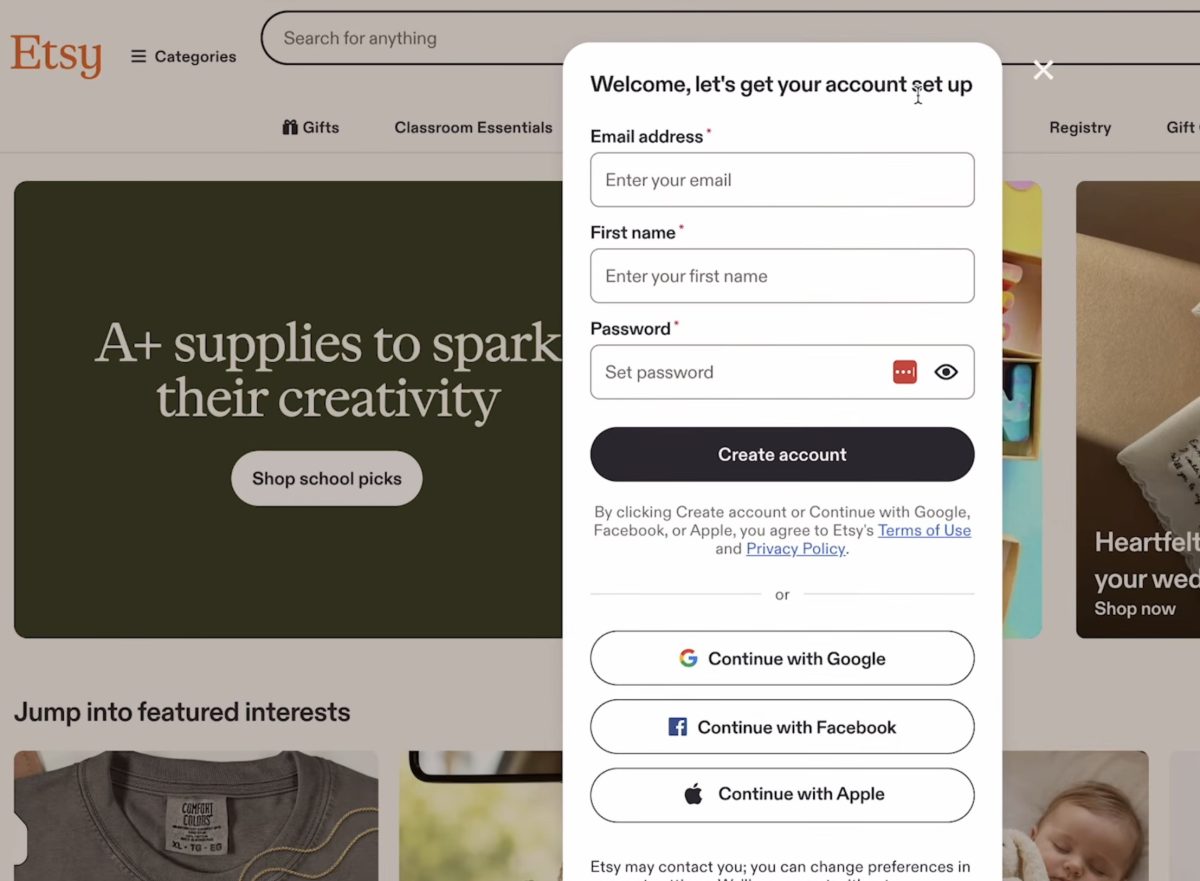
Click Register and walk through the steps.
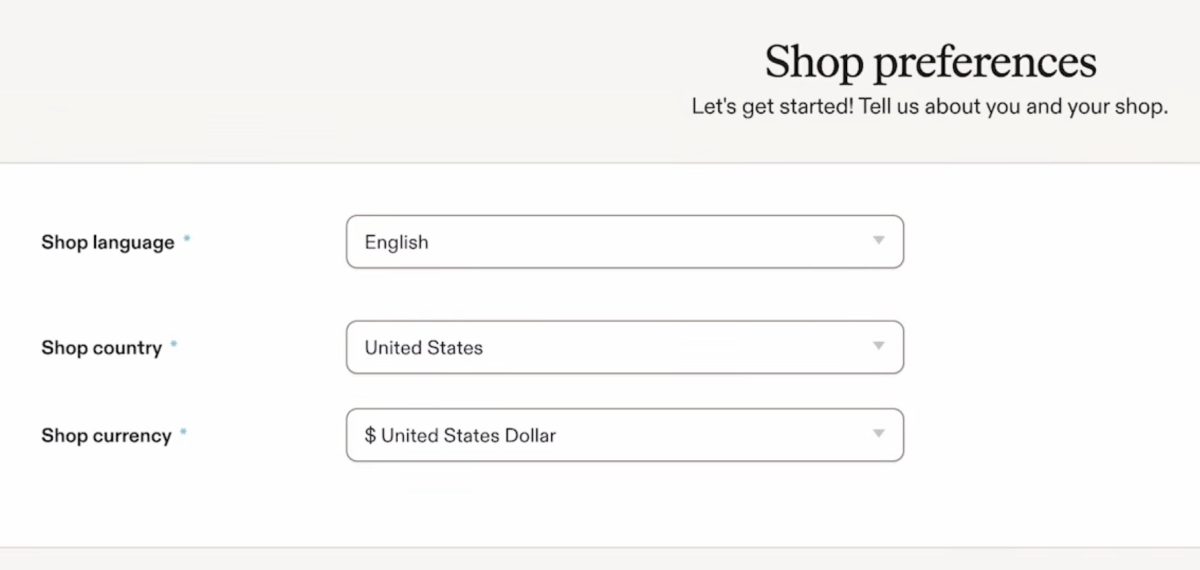
With your account set up, click Sell on Etsy to start your shop.
Choose the shop language, country, currency, etc.
Choose an Etsy Shop Name
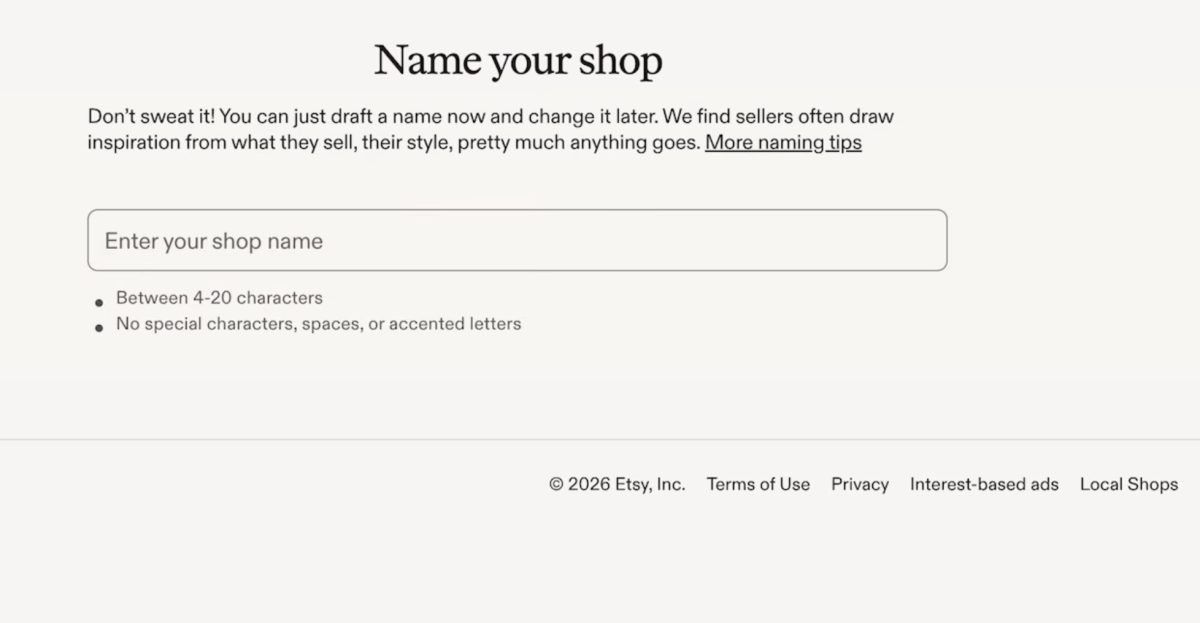
Next, you need to name your shop. This is an important step. You can change it later, but if your shop does well and you decide you don't like the name, customers may not be able to find you later.
You'll need to find a name that is available on Etsy, which means you may need to make an adjustment to your business name. You want it to be memorable and not too limiting.
For example, Tumblers by Angie may be great right now while you're selling tumblers, but what if next year you decide you want to sell other things? Maybe you want to stop selling tumblers, or you want to sell more than tumblers. People may be confused by your company name, and current customers may be confused if you change your name.
Set Up Business Information on Etsy
After choosing a name, we'll set up the business side of the shop.
In this area you'll set up how to get paid, add your tax information, add your physical and mailing address, etc.
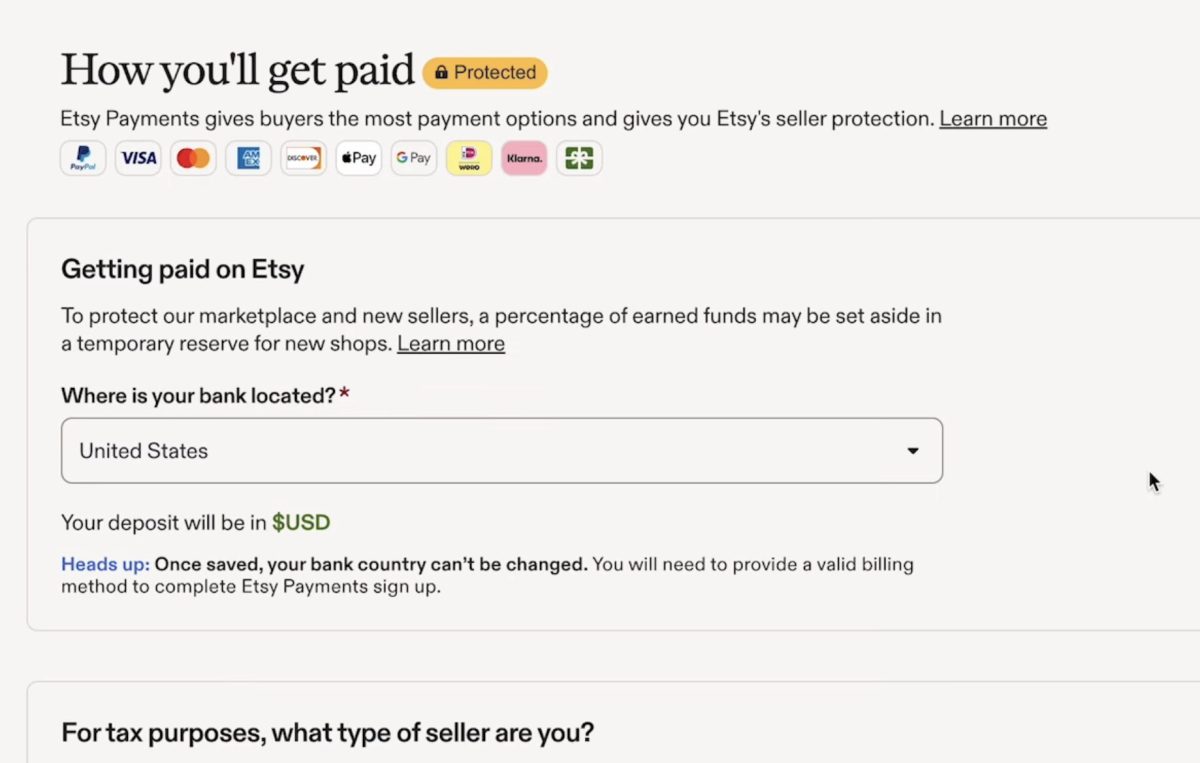
You can also set up shipping policies, return policies, shop processing time, etc.
Think about shipping again. If you guarantee next-day shipping, what are you going to do if something comes up?
Make sure to think through the policies and whether you can fulfill them.
Create Your First Listing
Now, you're ready to create your first listing.
This is the exciting part. Make sure you have your product ready. You'll need photos.
Add Photos to Your Listing
Photos are very important. People won't be able to touch and feel the items, so they need to be able to see them.
You want something that will stand out. Between the photos and the name of the listing, you want to catch people's attention.
Make sure the photos are high quality. This is so important that I'd suggest taking a photography class or hiring someone to take the photos if you can't do them yourself.
Also, make sure you're up to date with the rules. As of the date of this article, Etsy requires at least one photo to be completely unedited. You can crop and straighten the image, but you cannot enhance the lighting, background, etc. In an effort to crack down on AI, at least one photo has to show the actual item with an actual background.

Add a Title, Tags, and Description to Your Listing
Now, we're ready to add the title, tags, and description to the listing.
This is just as important as the photo. You need to describe your product in a way that people will search for it.
A lot of people worry about SEO keywords. In my personal experience, having a robust description of the item will take care of SEO.
I like to include a hook, something to draw them in. Share the features of the product and how they benefit the customer. You don't want to just include the height, weight, stuff like that. You also want to include the story. Why did you create it, and how does it help them or improve their life?
People on Etsy are looking to buy from an actual person. Include how you use it and how to care for it.
If you allow add-ons or customization, you can also mention that here.
When thinking about the description, think about talking to someone face-to-face about the item. What questions might they ask? Make sure to answer those in the description.
I also like to describe the item in multiple ways. If I were selling a homemade soy candle, I may call it a soy candle in the title but also call it a handmade candle in the description. If the candle is all natural, include that in the description.
Vary how you describe it, and you'll be sure to capture those SEO keywords.
Pricing Your Item
Before pricing your item, make sure you're factoring in all the costs.
Think about all of the materials you used to make it, all of the materials you need to package it, including ink, labels, tape, etc.
Include your time making, promoting, packaging, and shipping the item. Don't forget to pay yourself.
You cannot forget to include the Etsy fees that you'll have to pay.
You don't want to lose money because of hidden fees.
What are the Etsy Fees
Etsy has various fees, and you need to know what they all are to ensure you're including them in the product cost.
There are listing fees, transaction fees, payment processing fees, etc. It can be overwhelming, so I'm happy to say I found a free tool you can use that will total those fees for you, so you can include them in the total price.
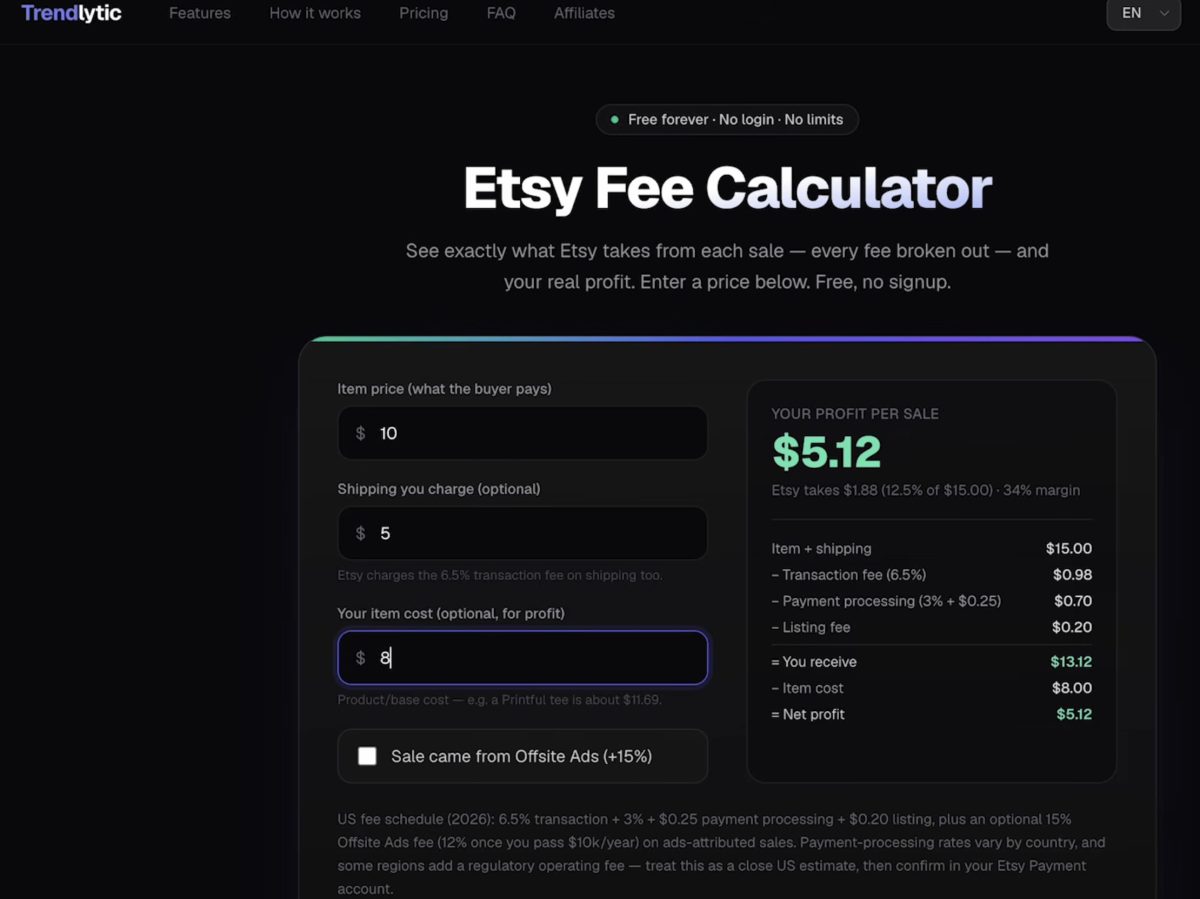
I like this tool because it helps me decide if my pricing is correct. Maybe you need to raise it; maybe you need to lower it. Knowing all the fees will help you make an informed decision.
I would encourage you to leave room to mark items down if needed. People love sales and coupons, and you don't want to lose money by taking advantage of them.
Etsy SEO Tool
I do have another tool I want to tell you about. This tool is not free, but if you're struggling with people seeing your Etsy listings or have no idea what SEO is, this tool can help.
This is a keyword research tool, and it has a free trial you can use to test it out. It will give you trends, scores for keywords, and ideas for tags that actually sell.
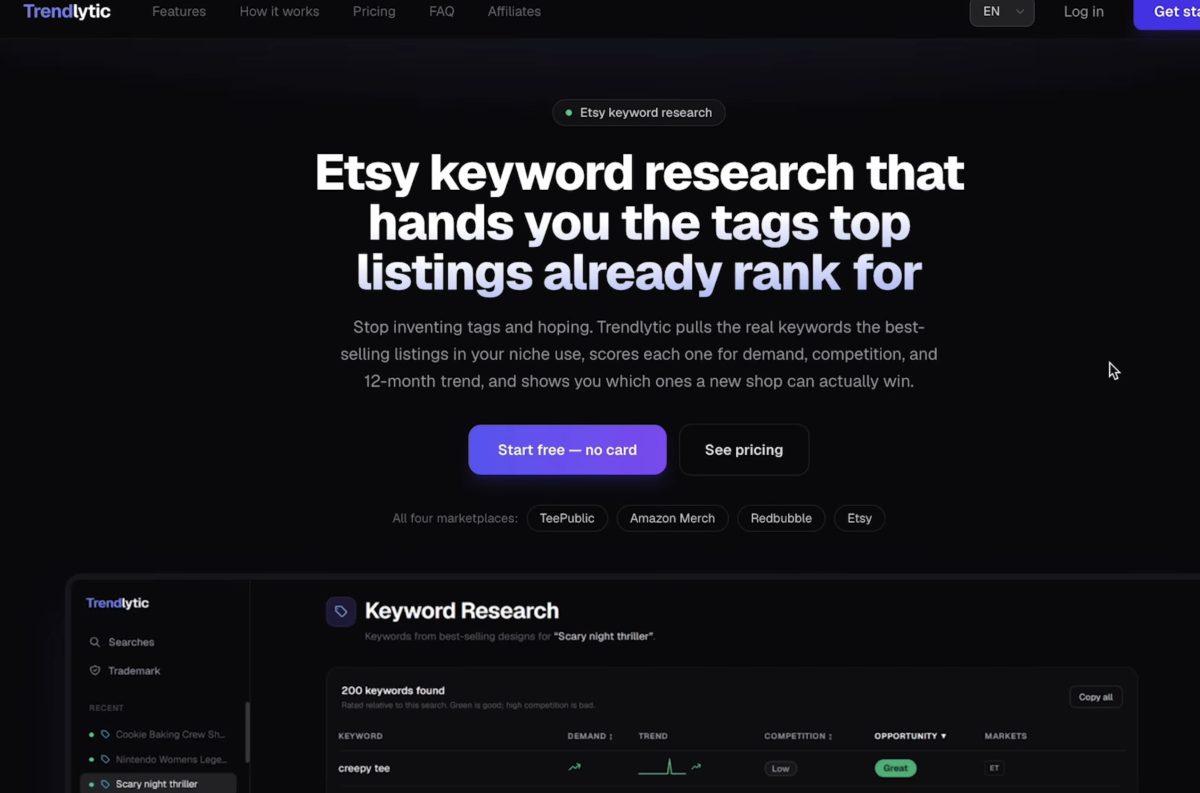
It's a great way to fill the title and tags easily while keeping Etsy SEO rules in mind. You can test this tool for free; if it's right for you, use code COTTAGE20 to save 20% when you check out.
How to Promote Your Etsy Shop
Now that we have our first listing, how do we help people find it? How many items do you need to have listed before promoting it?
There is no right or wrong answer, but I have some tips to share.
Personally, I think an Etsy store with multiple listings looks more established which makes me feel better about purchasing from them.
Are there Etsy stores with one listing doing well? Yes, there are. It may depend on what you sell and how many variations you can make of it.
I think 5-10 listings are a great place to start. I think it looks good at a glance and helps people know you're serious about your shop.
This is not a hard-and-fast rule. If you have three items and feel like you are ready to start, go ahead.
If you have an email list and/or social media, promote your shop to your current following. People who are already following you are more likely to purchase from you than someone who doesn't know you at all.
There are also some customizations you can make to the home page of your Etsy store. I recommend making it as custom as possible so it's branded to match you. I think it makes a difference when people land on your shop.
Common Mistakes Etsy Stores Make
Before we finish, let's talk about some common mistakes beginners make so you don't make them.
The main thing I see is people underpricing themselves. You may see someone else selling a similar item for less and be tempted to lower your price. Before considering lowering the price, make sure you've looked at every single cost associated with making, selling, and shipping that product. Look at all of those things and then make sure you pay yourself and have an actual profit.
Bad photos are a very common mistake, especially for first-time sellers. Take the time to get a good photo, even if you need to take a class or ask for help, and make sure you're following the current rules for photos in Etsy listings.
Third, you cannot ignore SEO. You need to pay attention to what people are actually searching for and include those terms in your title and product description.
The last common mistake I see is not having clear policies. Really think about your shipping policies, return policies, etc. Not adding policies or having unclear policies can really impact your shop.
With clear policies, your customers know before purchasing how quickly they can expect the item or what the return/exchange process is.

Are You Ready to Start Your Own Etsy Shop?
Now, I have to ask: are you ready to start your own Etsy shop? Were you considering opening a shop before today? Did reading this help you or make you second-guess your decision?
If you're ready to start a handmade business or want to grow your handmade business, Etsy can be a great option for you. If you've considered starting a small business, why wait? Start today.
I hope I've answered any questions you may have about starting an Etsy shop. If you have additional questions, leave them in the comments, and I'll be happy to answer them for you.