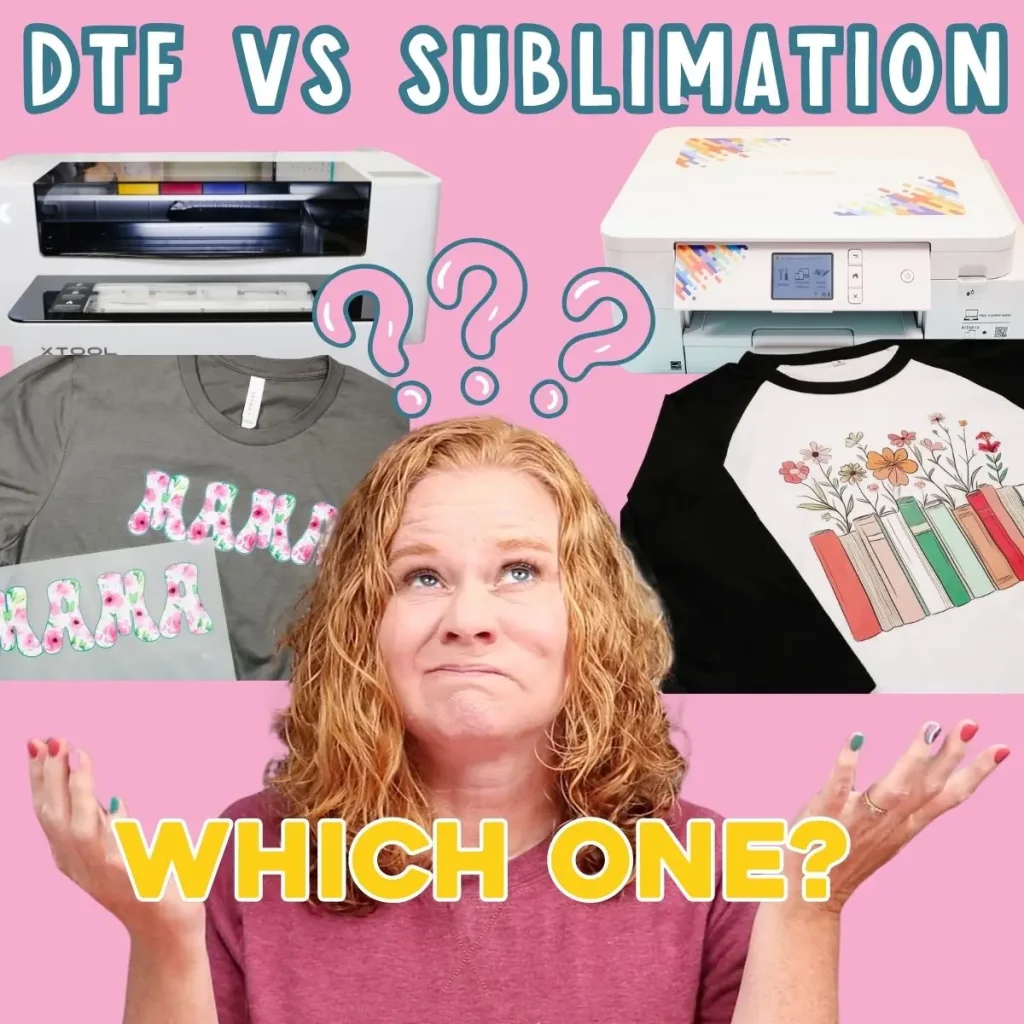
How do you decide between DTF and sublimation? Let's chat about DTF vs sublimation to help you learn what each one does, how they compare, and when I would recommend each option.
If you're trying to figure out what process is right for the project you're making, keep reading because we're going to go through each printing process to help you answer that question.
Whether you're working on a single project or deciding which way to go for your small business, you're going to want to know the pros and cons of both printing processes.
When discussing DTF vs sublimation, there are a variety of things to consider to help you get the best results for your finished project.
DTF vs Sublimation Printing Comparison
Should you invest in a sublimation printer? Is a DTF printer the right choice for you? Is ordering DTF prints the way to go? How do you decide which option is right for you?
What is Sublimation Printing?
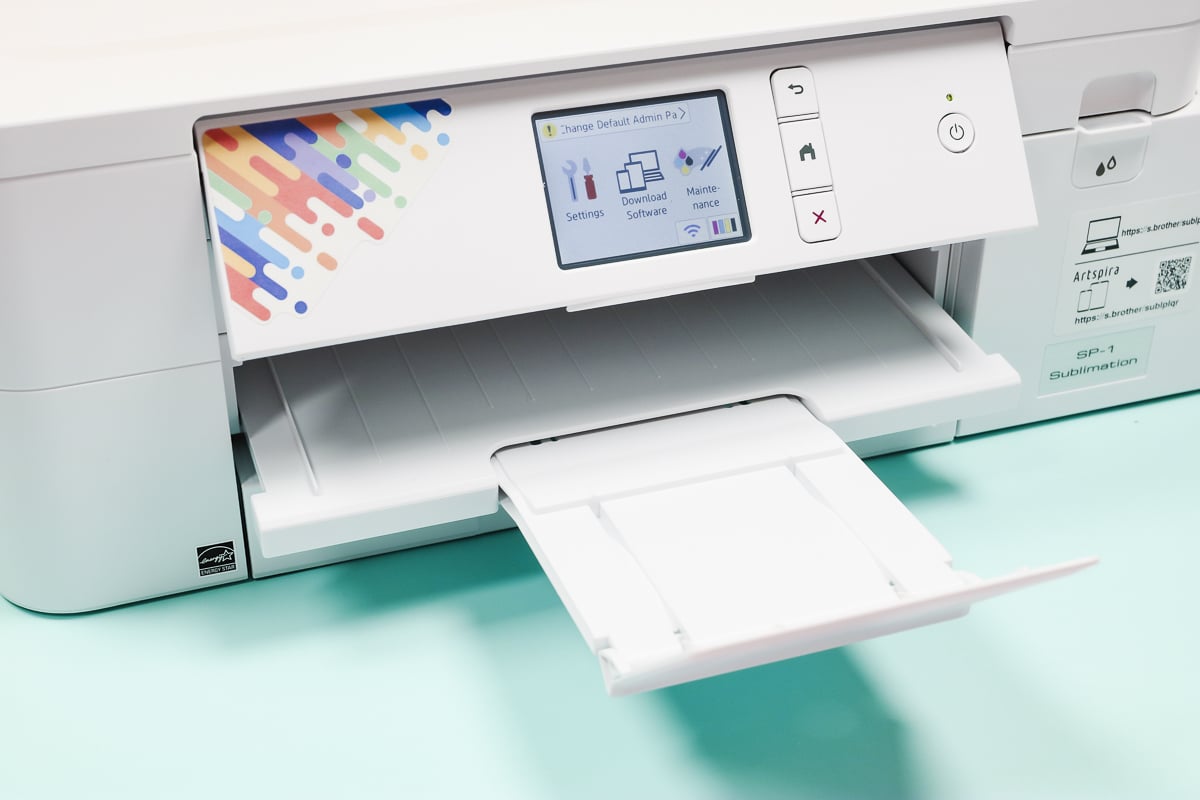
Sublimation is a special ink that is printed on special paper from a specific printer. You cannot do this process with regular ink.
Next, you take the print and place it on a light colored or white fabric that is at least 75% polyester. Sublimation ink bonds to the polyester in the fabric.
Sublimation ink is translucent, which means whatever color your blank is will show through the ink and can impact the final product.
When high heat is applied, the ink turns into a gas, and the gas bonds to the polyester fibers, transferring the design to the fabric permanently.
What is DTF Printing?
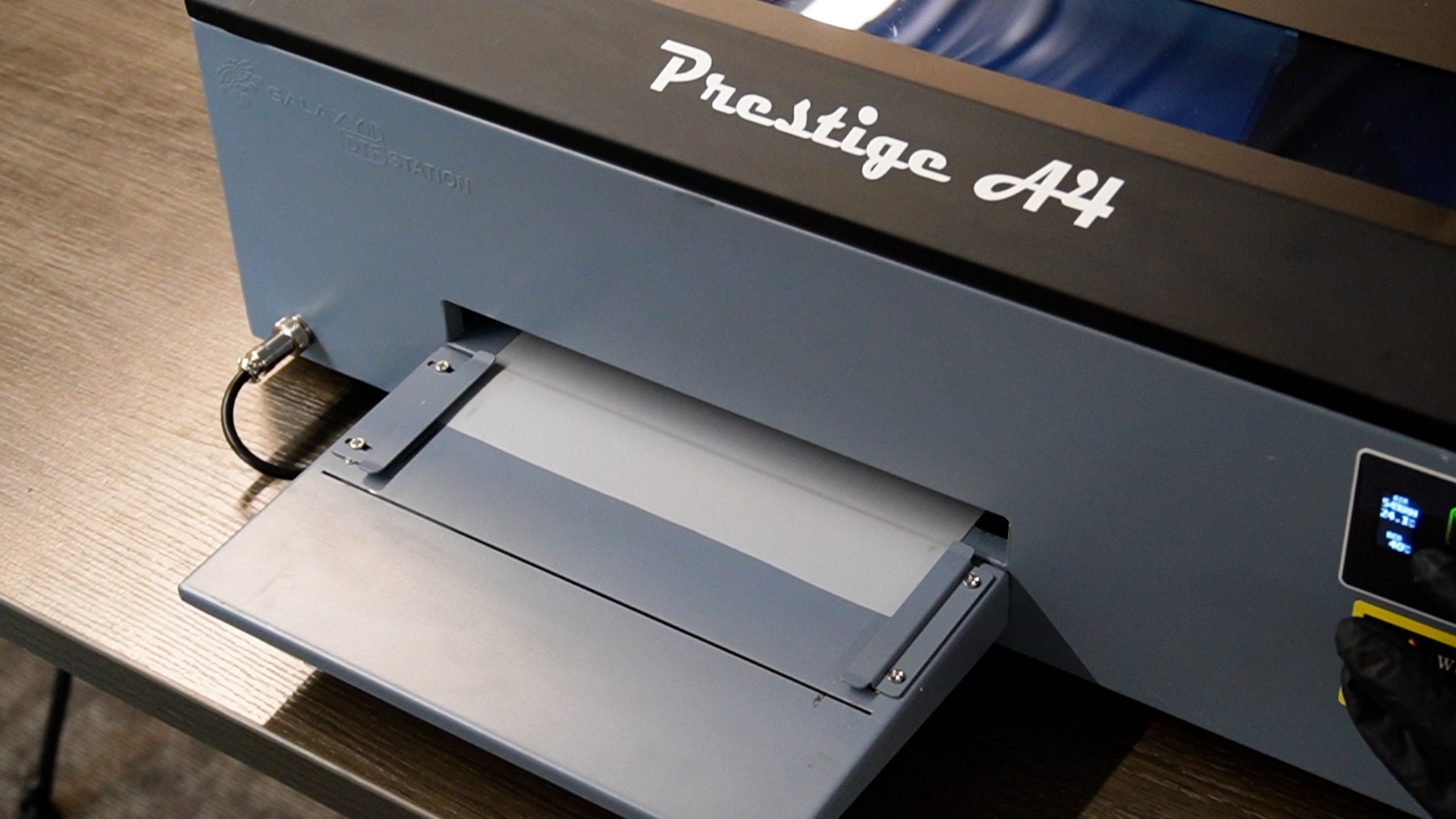
DTF is a special ink that is printed on film. While the ink is wet, a powder adhesive is applied and then cured with heat.
That DTF print can be applied to any color and any type of fabric. As long as the fabric can withstand the heat, you can apply it.
DTF ink is opaque, and it has white ink. Once the image is printed and pressed, you cannot see through it. This is what allows you to put the designs on even dark colored garments easily.
DTF Printers vs Sublimation Printers
Both of these methods require a specialized printer. A DTF printer has a significantly higher cost than a sublimation printer, and in a side-by-side comparison, a DTF printer requires more maintenance than a sublimation printer.
The great thing about both options is that if you don't have the printer and want to try out the process, you can order prints.
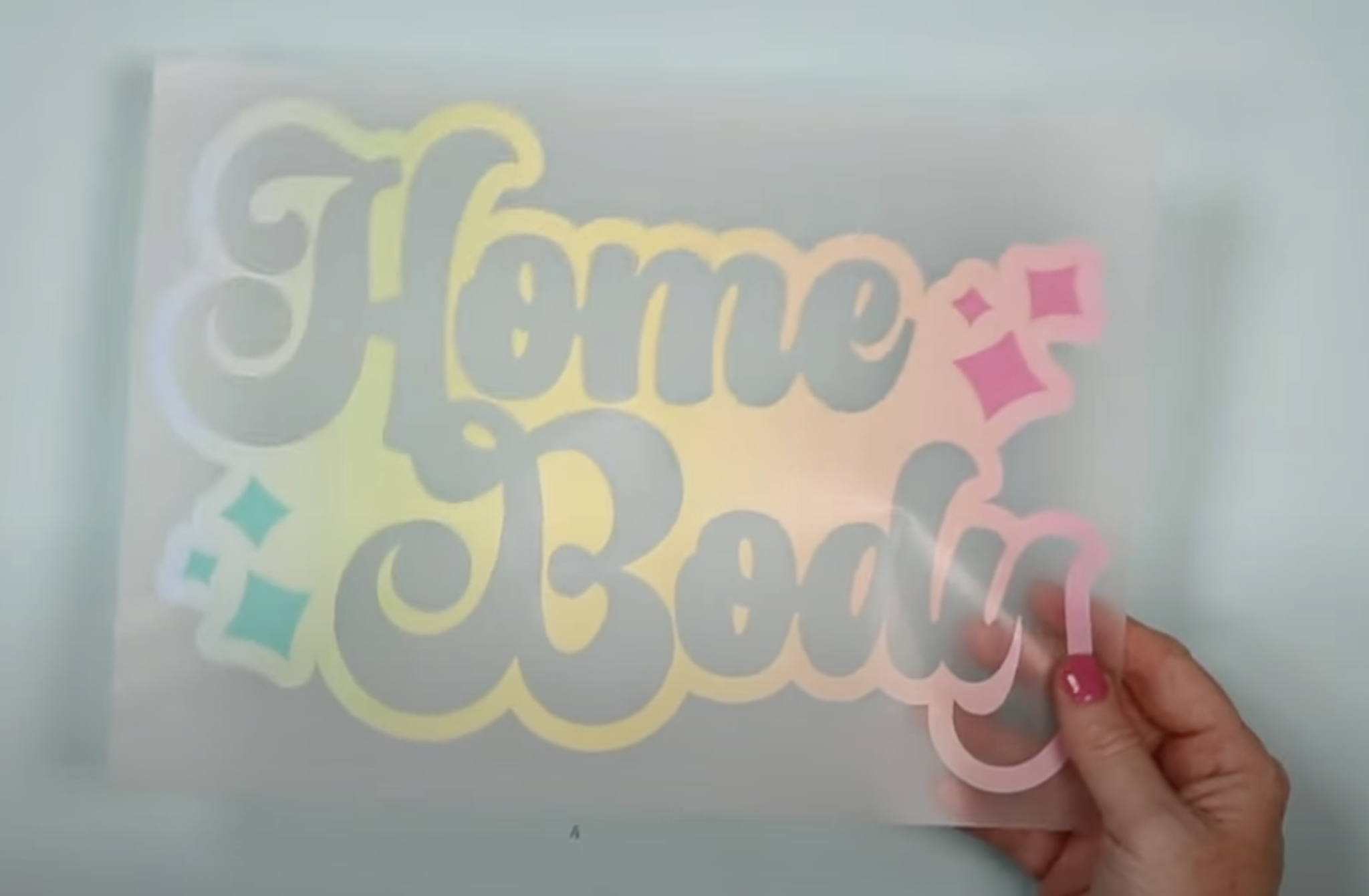
Places like Ninja Transfers sell DTF prints that you can have shipped right to you, and all you need is a heat press to apply them to a blank.
To order sublimation prints, you'll need to find a seller on Etsy or someone local who has a sublimation printer.
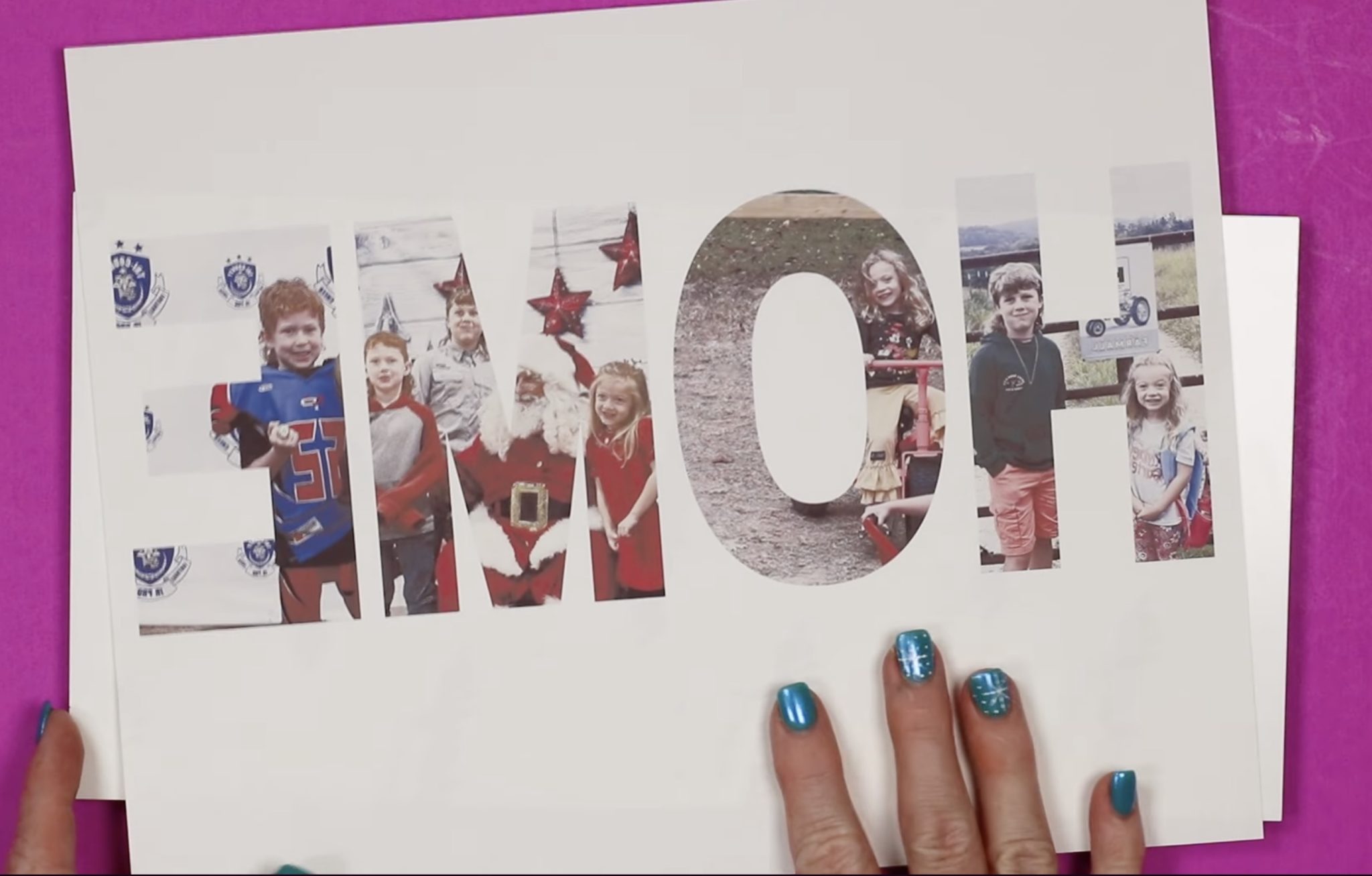
For both sublimation and DTF prints, as long as you store them in a cool, dry location, away from direct light, you don't have to press them right away. They can be stored to be pressed at a later date.
How Do You Make a Sublimation Project?
Now, let's walk through the typical steps for making a sublimation project.
- First, you're going to find the image you want to use and print it out. To print it correctly, you'll need sublimation ink in a sublimation printer, and it needs to be printed on sublimation paper. The image needs to be mirrored before printing so it is oriented correctly after pressing.
- For this example, my blank is a shirt. The fabric needs to be white or another light color and at least 75% polyester for the best results.
- Preheat the shirt to remove any moisture. Follow the heat instructions for the blank you're using.
- Place a piece of protective paper inside the shirt to protect the back of the shirt from any sublimation ink that might bleed through.
- Locate the print, ink side down, and secure with heat-resistant tape.
- Cover with protective paper to protect the heat press from ink bleeding through.
- When the time is up, peel back the sublimation print, and you're left with a gorgeous transfer that will last as long as the shirt itself.
Can I Sublimate on Dark Colors or Cotton?
If you try to sublimate onto dark-colored shirts, the shirt color will show through the ink. That means you'll only be able to see the ink colors that are darker than the fabric.
You may have heard of people talking about hacks to sublimate on cotton or dark colors.
These hacks actually require you to sublimate onto something like a sublimation HTV. While the image will transfer, it isn't any different than applying HTV to a garment. It won't last as long as sublimating directly on a polyester garment.
Keep that in mind if you decide to do one of the hacks floating around.
How Do You Make a DTF Project?
Now, let's walk through the process of making a DTF project. Again, for this example, I am going to add DTF to a shirt.
- To make a shirt with a DTF print, you'll either need to order a print from somewhere like Ninja Transfers or print a design on your own DTF printer.
- I have a whole article on DTF safety, and I highly recommend you review it before purchasing your own DTF printer. I only recommend a DTF printer that applies the adhesive powder and cures the powder in a way that is contained within the printer. The xTool apparel printer I own does everything within the printer so that by the time it comes out, it is ready to press. I do not recommend any of the DTF hacks that are popping up.
- The perk of DTF is the pressing process. It really is so easy. Preheat your shirt and locate the design where you want it.
- Follow the instructions for your DTF print. Some require you to cover it with a protective paper during the pressing process.
- Press for the full time and follow the instructions to know if you should peel back the carrier sheet warm or cold.
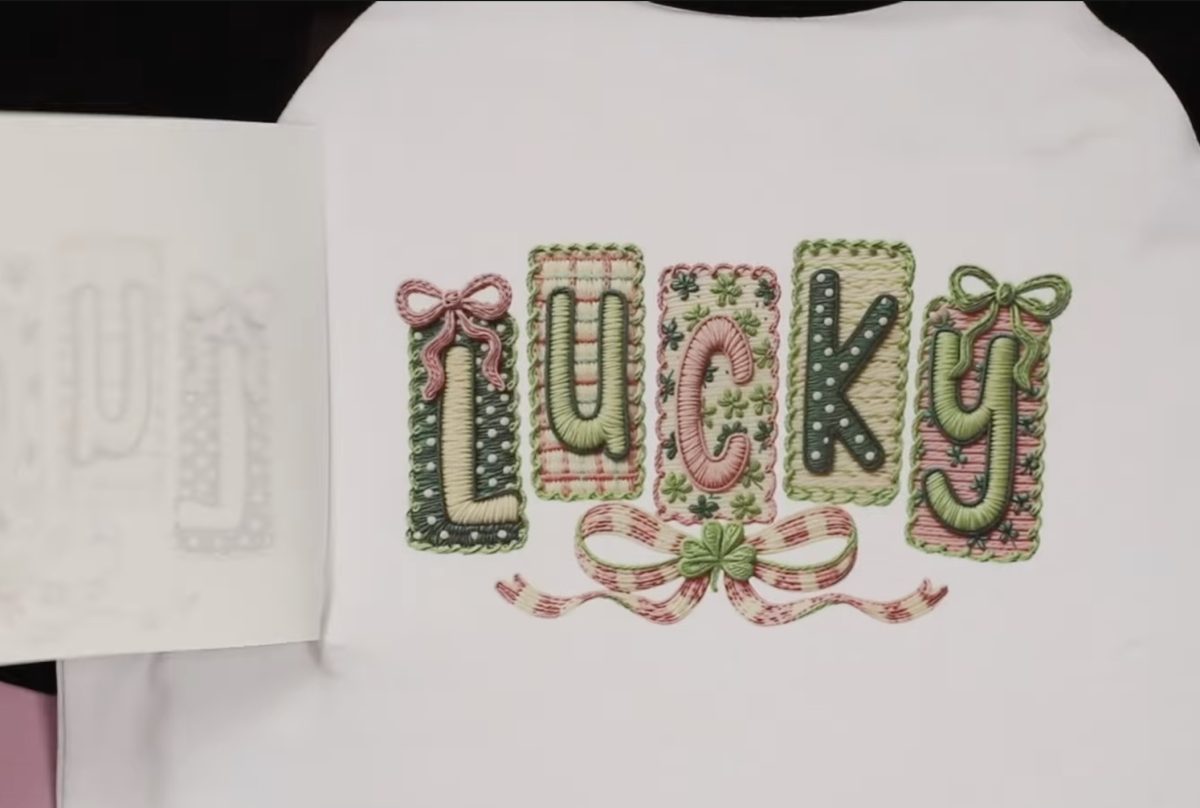
- After removing the carrier sheet, cover the design with the protective paper and press again. This ensures the DTF print is really stuck to the fibers and will give you the best, longest-lasting results.
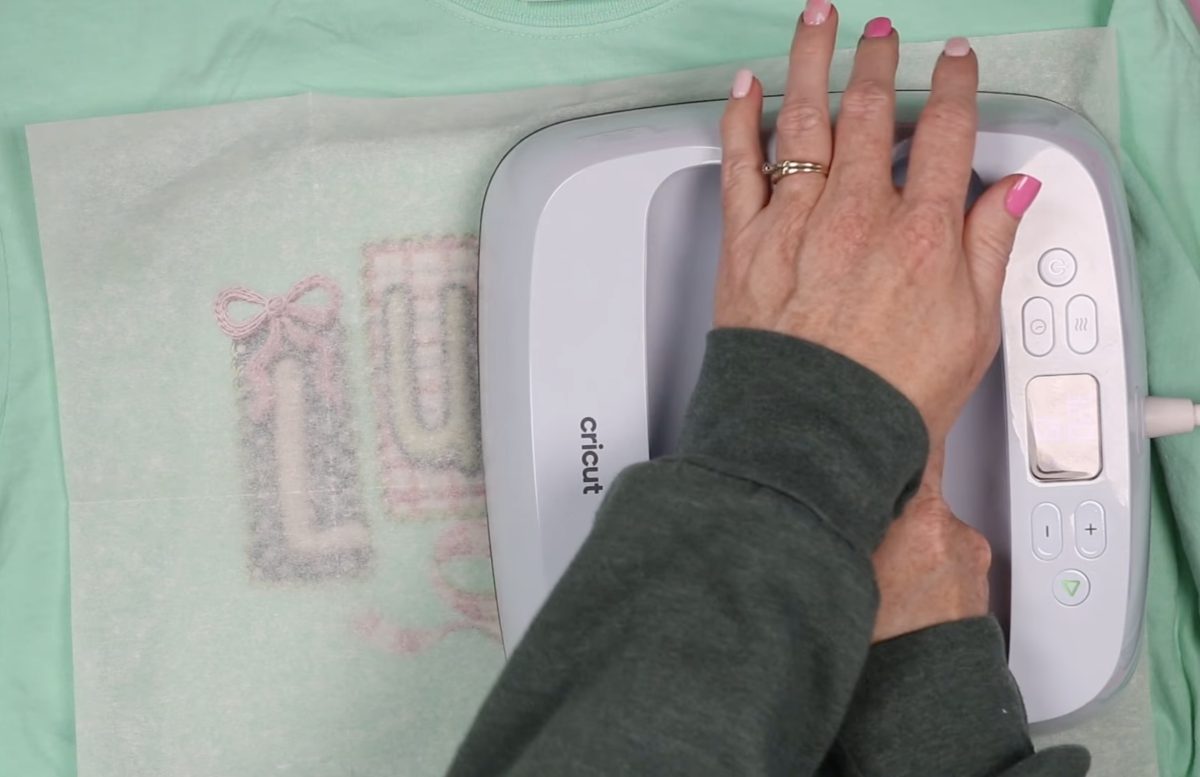
After the second press, you're done, and the shirt is ready to wear.
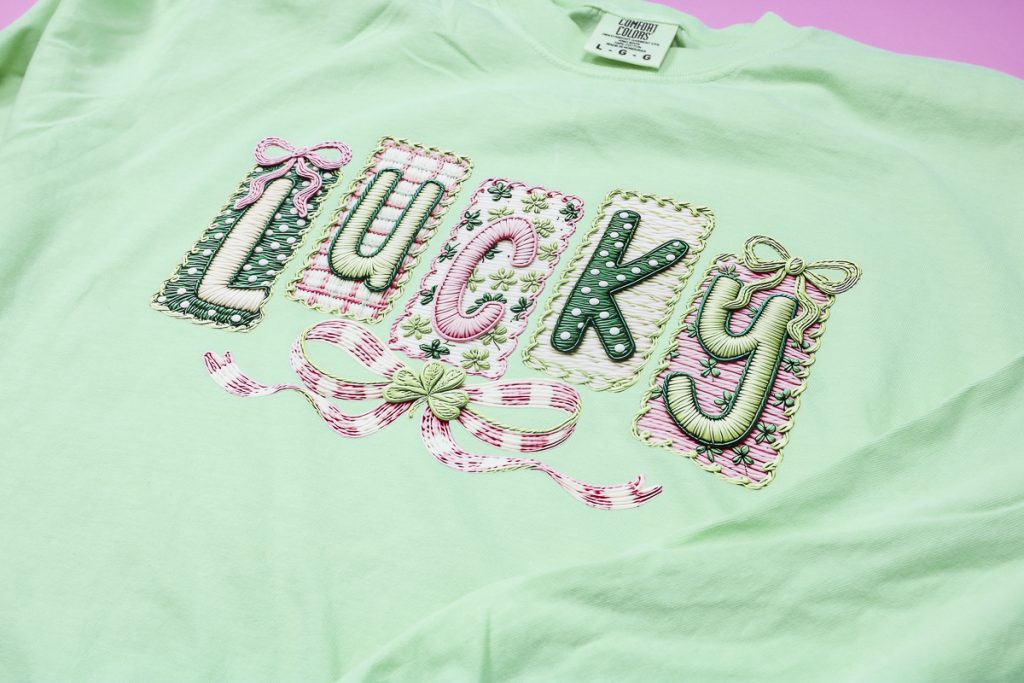
Unlike sublimation, DTF prints sit on the fabric. There is a slight hand feel, but it isn't nearly as thick as HTV. Personally, the feel doesn't bother me at all. I love that I can add full-color designs to any color or fabric type.
Is DTF or Sublimation Right for Your Next Project?
Is DTF or sublimation the right printing process for your project? Let's talk it through.
If your blank is white or light colored and at least 75% polyester, then sublimation is the right option.
Are you working with a garment that is dark in color? Is the fabric 100% cotton, or something other than 75% polyester? If the answer to either of these questions is yes, you'll want to use DTF. That is one of the benefits of DTF: you can put it on almost anything. If you're working with fabric and don't want to limit your blank options, DTF is the way to go.
Remember, DTF works with porous surfaces. We're talking about fabrics, some leathers, and possibly wood. You'll need to test the type of leather and wood you're using to see if it will work the way you want.
You get a lot more flexibility with blanks with sublimation. You still need it to be white or a light color, and it needs to be a sublimation blank with a poly-coating, but as long as it is both of those things, the sky is the limit. These days, any time I think “I wonder if there is a sublimation …” a quick Google search tells me there is. I'm not sure I've looked for something I haven't been able to find in a long time.
What Lasts Longer, Sublimation or DTF?
When applied correctly, DTF lasts a very long time. I also really like the way it wears. As it wears, it fades in a way that gives it a vintage look. It doesn't peel or flake like HTV.
If you want something that will last the life of the garment, sublimation wins hands down. As long as it is applied correctly, sublimation will not fade; there is no adhesive, so you're not dealing with cracking, peeling, or lifting.
You're going to wear out the fibers of the fabric itself before you impact the sublimation design.
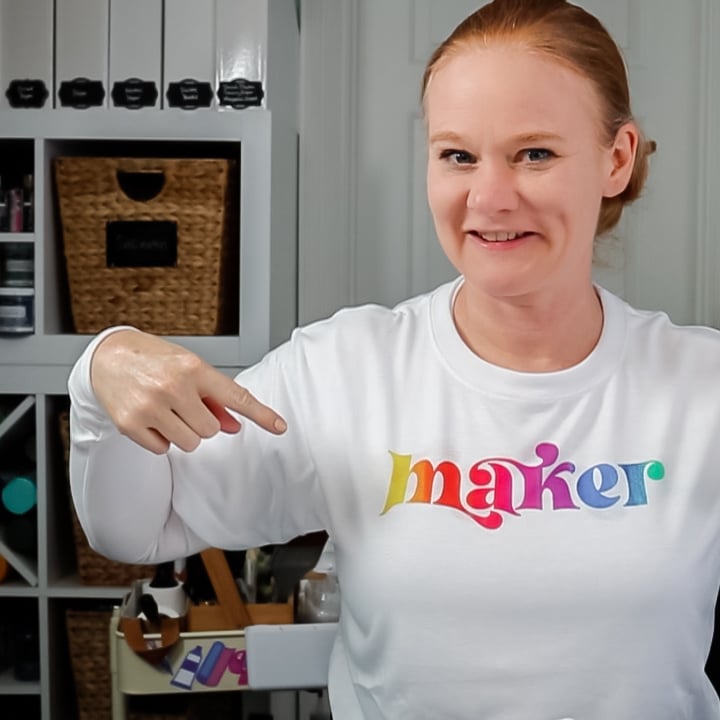
Sublimation vs DTF – You Don't Have to Choose Just One!
Now that we've talked about sublimation vs DTF, the good news is that you don't have to choose.
Even if you have a sublimation printer, you can order DTF prints and use those for projects that make more sense to use DTF for.
Maybe you've decided that DTF is the right choice for fabric projects, but you want a sublimation printer for projects like coasters, mugs, tumblers, etc. You can easily do that by ordering the DTF prints.
With sublimation and DTF in your pocket, the project opportunities are limitless.
I hope I've answered any questions you have about DTF vs sublimation printing. If you have any additional questions, leave them in the comments, and I'll be happy to answer them for you.